

Virtual reality is revolutionizing healthcare delivery in Alberta and beyond, offering groundbreaking solutions for patient care, medical training, and rehabilitation. From helping stroke survivors regain mobility to managing chronic pain without medication, VR technology is transforming how healthcare professionals treat and support patients. This innovative approach combines immersive 3D environments with precise motion tracking to create engaging, effective therapy sessions that patients can access from hospitals, clinics, or even their homes.
Gone are the days when rehabilitation meant repetitive exercises in sterile hospital rooms. Today’s VR-powered healthcare solutions offer personalized, engaging experiences that adapt to each patient’s needs and progress. Whether you’re recovering from surgery, managing anxiety, or working to improve physical function, virtual reality provides a safe, controlled environment where you can practice real-world skills with immediate feedback and measurable results.
As this technology becomes more accessible and affordable, more Albertans are discovering how VR can complement traditional healthcare approaches and accelerate their recovery journey.
How VR Changes the Rehabilitation Game
Making Exercise Engaging Again
Virtual reality is transforming traditional rehabilitation exercises from mundane routines into engaging, interactive experiences. As one of the most promising digital therapeutic tools, VR technology makes repetitive movements more enjoyable by immersing patients in virtual environments.
Instead of counting repetitions while lifting weights or stretching, patients might find themselves picking virtual apples from trees or exploring underwater worlds. These gamified exercises maintain the same therapeutic benefits while significantly improving motivation and adherence to treatment plans.
The technology adapts to each person’s abilities and progress, providing real-time feedback and gentle encouragement. For example, stroke recovery patients in Alberta rehabilitation centers are using VR systems to practice daily activities like reaching for objects or maintaining balance, all while being guided through beautiful virtual landscapes that make each session feel less like therapy and more like an adventure.
Measuring Progress in Real-Time
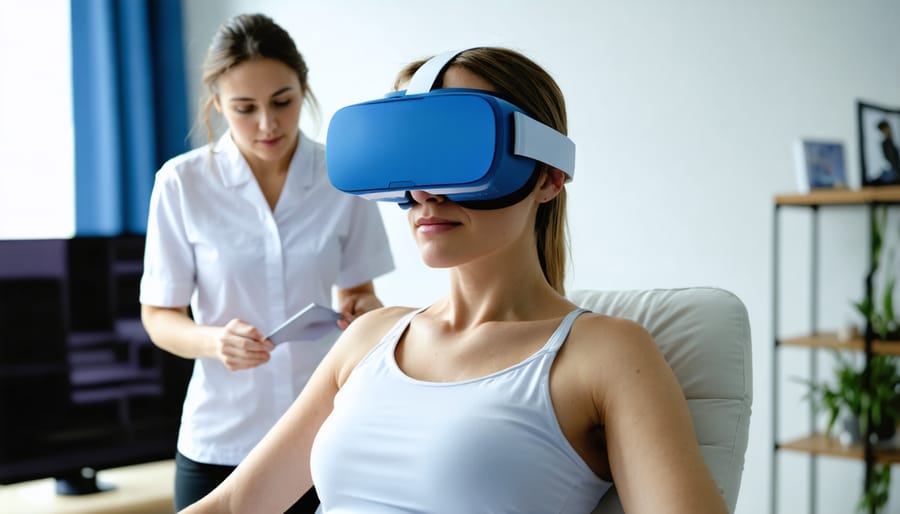
Modern VR systems excel at tracking and measuring progress in ways traditional therapy can’t match. Every movement, reaction time, and exercise repetition is recorded with precise accuracy, giving healthcare providers detailed insights into your recovery journey. These systems work alongside remote health monitoring systems to create a complete picture of your health progress.
The real-time feedback helps both you and your healthcare team adjust your treatment plan on the fly. For example, if you’re working on balance exercises, the system can immediately show you when you’re leaning too far in one direction or if your movements are improving over time. This instant feedback makes it easier to correct mistakes and build proper form.
Many VR platforms also generate easy-to-understand progress reports, showing you exactly how far you’ve come. These visual markers of success can boost motivation and help you stay committed to your recovery goals.
Real Applications in Physical Recovery
Stroke Recovery
Virtual reality has revolutionized stroke recovery by offering engaging and effective rehabilitation options. Through VR technology, stroke survivors can practice everyday movements and activities in a safe, controlled environment. These exercises range from reaching for virtual objects to walking through simulated environments, helping patients regain mobility and confidence.
What makes VR particularly effective for stroke recovery is its ability to provide immediate feedback and track progress over time. Patients can see their movements replicated on screen, making it easier to understand and correct their form. The interactive nature of VR also helps maintain motivation – a crucial factor in long-term rehabilitation success.
Several Alberta rehabilitation centers now offer VR-based therapy programs. These programs can be customized to each patient’s needs and abilities, gradually increasing in difficulty as they progress. The immersive experience helps rewire the brain’s neural pathways, a process known as neuroplasticity, which is essential for recovery.
Research shows that combining traditional physiotherapy with VR exercises can lead to better outcomes than conventional therapy alone. Patients often report faster improvements in balance, coordination, and upper limb function when using VR-enhanced rehabilitation methods.

Sports Injury Rehabilitation
Virtual reality is revolutionizing sports injury rehabilitation, offering athletes innovative ways to recover and maintain their training momentum. Through immersive VR environments, injured athletes can perform guided exercises while their movements are precisely tracked and analyzed in real-time. This technology helps maintain muscle memory and coordination during recovery periods when traditional physical activity might be limited.
Physical therapists in Alberta are increasingly incorporating VR systems that simulate sport-specific movements, allowing athletes to practice their techniques safely while recovering. For example, a basketball player recovering from an ankle injury can work on shooting form without risking re-injury, while receiving immediate feedback on their body mechanics.
The motivational aspect of VR rehabilitation is particularly valuable, as the gamified elements make repetitive exercises more engaging. Athletes can track their progress through measurable metrics and virtual achievements, helping them stay committed to their recovery program. Many rehabilitation centers now offer specialized VR programs that combine traditional physiotherapy with virtual training sessions, creating a comprehensive recovery experience.
Balance and Mobility Training
Virtual reality is revolutionizing balance and mobility training, offering innovative solutions for people recovering from injuries or managing chronic conditions. Using VR headsets and motion-tracking technology, patients can practice balance exercises and movement patterns in safe, controlled virtual environments.
Therapists in Alberta are increasingly using VR programs that create engaging scenarios, from walking through virtual parks to performing daily activities like reaching for objects. These immersive experiences help patients improve their coordination, strength, and spatial awareness while reducing the fear of falling.
The technology adapts to each person’s abilities, gradually increasing difficulty as they progress. For example, someone recovering from a stroke might start with simple standing exercises and advance to more complex movements like navigating virtual obstacles.
What makes VR training particularly effective is its ability to provide real-time feedback and track progress over time. Users can see their improvements, which helps maintain motivation and engagement throughout their rehabilitation journey.
Mental Health Benefits
Motivation and Engagement
Virtual reality transforms traditional rehabilitation exercises into engaging, game-like experiences that keep patients motivated throughout their recovery journey. Instead of repetitive movements, patients can immerse themselves in virtual environments where they might catch virtual butterflies, tend to a digital garden, or navigate through exciting obstacle courses – all while completing their prescribed exercises.
This interactive approach helps patients stay committed to their treatment plans by making therapy sessions more enjoyable and less monotonous. Progress tracking features allow patients to see their improvements over time, creating a sense of achievement and encouraging them to push forward. Many patients report looking forward to their VR therapy sessions, leading to better attendance rates and more consistent practice at home.
The technology also reduces the perceived difficulty of exercises by distracting patients from discomfort or fatigue, allowing them to exercise longer and more effectively.
Reducing Recovery Anxiety
Virtual reality is transforming how patients approach their recovery journey by creating calming, immersive environments that help manage rehabilitation-related anxiety. Instead of focusing on pain or physical limitations, patients can engage with peaceful virtual scenes like mountain landscapes or ocean views while performing their exercises. This distraction technique has shown remarkable success in reducing stress levels and improving patient participation in therapy sessions.
Many Alberta rehabilitation centers now offer VR programs that gradually expose patients to challenging movements within a safe, controlled environment. Whether you’re recovering from surgery or managing a chronic condition, these virtual experiences can help build confidence and reduce fear of movement. Patients report feeling more motivated and less anxious about their recovery process when using VR, leading to better adherence to their rehabilitation programs and ultimately, improved outcomes.
Getting Started with VR Rehabilitation
Local Resources and Centers
Several rehabilitation centers and healthcare facilities across Alberta now offer VR-based therapy services. In Edmonton, the Glenrose Rehabilitation Hospital leads the way with its dedicated VR rehabilitation program, helping patients recover from strokes and injuries. The University of Alberta Hospital also provides VR-assisted therapy services through its rehabilitation department.
In Calgary, the Foothills Medical Centre and Alberta Children’s Hospital offer innovative VR rehabilitation programs. The Active Life Physiotherapy clinic in Red Deer features VR equipment for balance training and physical therapy.
Many private physiotherapy clinics throughout the province have begun incorporating VR technology into their treatment plans. To access these services, ask your healthcare provider for a referral or contact these facilities directly. Most services are covered by Alberta Health Services or private insurance, though coverage varies by provider and treatment type.
For the latest information about VR rehabilitation services in your area, contact Alberta Health Link at 811 or visit your local healthcare center.
What to Expect
Before your first VR rehabilitation session, you’ll want to wear comfortable, loose-fitting clothing that allows easy movement. Arrive about 15 minutes early to complete any necessary paperwork and get familiar with the equipment. Your healthcare provider will explain the VR system and help you put on the headset and controllers.
Most sessions last between 30-60 minutes, including setup time. You’ll start with simple exercises to get comfortable with the virtual environment. Your therapist will be right there to guide you and adjust the difficulty level as needed.
Some people experience mild dizziness when first using VR, but this usually passes quickly. Let your therapist know if you feel uncomfortable at any point. They can adjust the settings or take breaks as needed.
Remember to bring water and any mobility aids you normally use. After your session, take a few minutes to rest before heading home, as your body may need time to readjust to the real world.
Virtual reality in healthcare represents a groundbreaking shift in how we approach rehabilitation and patient care. The technology offers a unique combination of engagement, effectiveness, and accessibility that traditional therapy methods often struggle to match. From helping stroke survivors regain mobility to supporting mental health treatment and chronic pain management, VR has proven its worth across numerous medical applications.
As Albertans, we’re fortunate to have access to several healthcare facilities and clinics that now offer VR-based rehabilitation programs. These innovative treatments provide hope and practical solutions for many who face physical or mental health challenges. The evidence supporting VR’s effectiveness continues to grow, showing improved patient outcomes and faster recovery times in many cases.
If you’re considering rehabilitation options, don’t hesitate to ask your healthcare provider about VR-based treatments. Many insurance plans now cover these innovative therapies, making them increasingly accessible. Remember, embracing new technology in healthcare isn’t just about following trends – it’s about choosing the most effective path to recovery and well-being. Take the first step today by exploring VR rehabilitation options available in your community.