

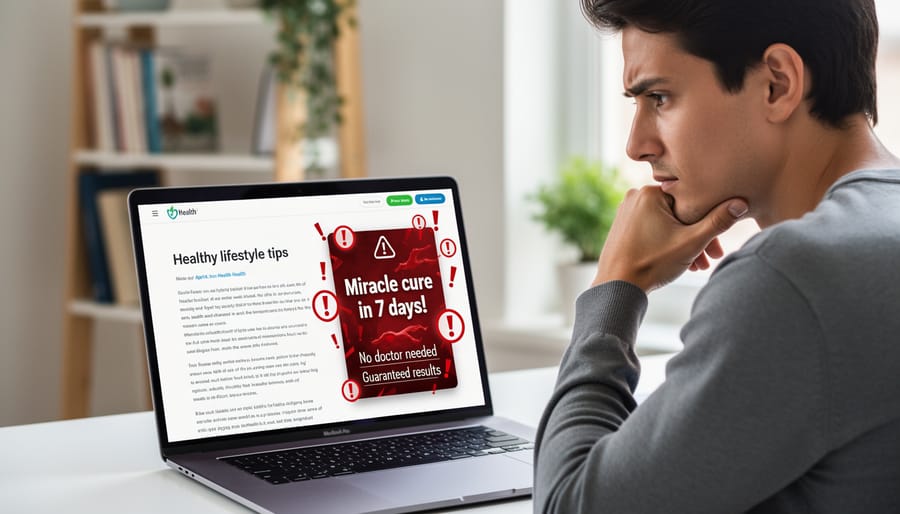
Question every headline that promises miracle cures or instant results. Before sharing that article about a “breakthrough” diabetes treatment, pause and ask: Who wrote this? What are their credentials? Do they cite peer-reviewed studies or just testimonials? This simple habit protects you from the flood of misleading health content that fills social media feeds across Alberta and beyond.
Check the website’s “About” section to verify whether real medical professionals stand behind the information. Legitimate health sources clearly identify their authors, disclose funding sources, and update content regularly based on current research. Notice the date on articles—health guidance evolves, and information from five years ago may no longer reflect best practices for managing conditions like heart disease or diabetes.
Compare claims across three different trusted sources before making health decisions. If only one website promotes a particular treatment while established medical organizations remain silent, that’s your red flag. Cross-reference information from your healthcare provider, government health agencies, and reputable medical institutions.
Watch for emotional manipulation in health content. Articles designed to frighten you into buying supplements or questioning proven treatments often use alarming language and cherry-picked statistics. Trustworthy health information presents balanced evidence and acknowledges uncertainty when research is still evolving.
Build these evaluation habits into your daily routine. Critical thinking about health information isn’t about becoming a medical expert—it’s about developing practical skills to separate evidence-based guidance from marketing hype, empowering you to make confident decisions about your wellbeing.
Why Digital Health Literacy Matters for Your Well-Being
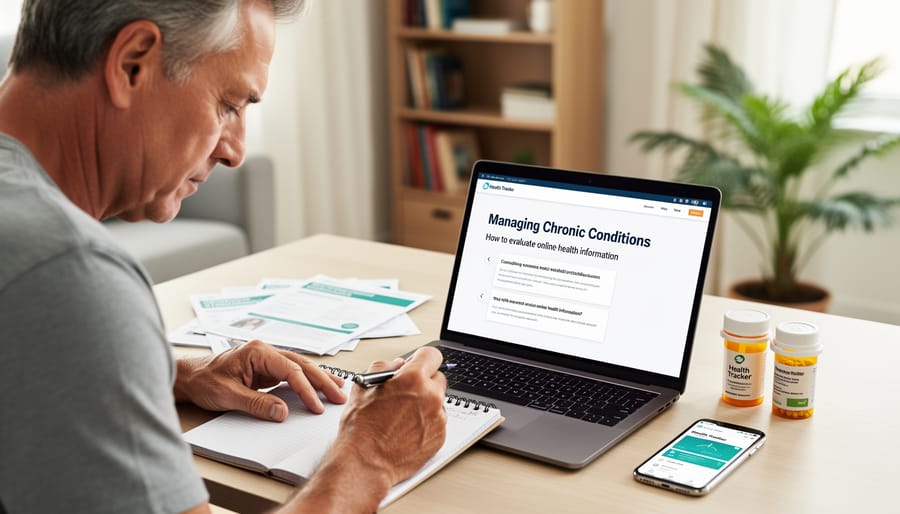
When you’re managing diabetes, heart disease, or another chronic condition, the health decisions you make every day truly matter. But here’s the challenge: a quick online search about your symptoms or treatment options can lead you down a rabbit hole of conflicting advice, miracle cures, and fear-inducing headlines. Without the skills to sort fact from fiction, this information overload can directly affect your health.
Research shows that poor digital health literacy negatively impacts health outcomes, particularly for people living with chronic conditions. When you can’t tell the difference between evidence-based guidance and marketing hype, you might skip medications that actually work, try unproven supplements, or delay important medical care. For Albertans managing conditions like Type 2 diabetes or hypertension, these choices can mean the difference between keeping your condition stable and facing serious complications.
Beyond treatment decisions, misinformation affects your daily lifestyle choices too. You might adopt extreme diets based on misleading posts, waste money on unnecessary products, or feel constant anxiety about health risks that aren’t actually relevant to you. This mental burden is real, especially when you’re already juggling work, family, and health appointments.
The good news? Building your critical thinking skills around digital health information is something you can absolutely do. It doesn’t require a medical degree or hours of research. With a few practical tools and questions to ask yourself, you can become more confident in evaluating what you read online and making decisions that truly support your well-being.
The Red Flags: Spotting Unreliable Health Information
Check the Source (Not Just the Headline)
A catchy headline can grab your attention, but it doesn’t tell the whole story. Before you trust health information online, take a few minutes to dig deeper into where it’s coming from.
Start by checking the website’s “About Us” page. Who runs the site? Look for organizations with clear credentials—like universities, health departments, or established medical groups. Be cautious of sites that don’t identify their authors or provide contact information. If you can’t figure out who’s behind the content, that’s a red flag.
Next, investigate the author. Are they a qualified health professional? Do they have relevant experience in the topic they’re discussing? Trustworthy sites usually include author bios with credentials. This mirrors what doctors look for when evaluating research—they want to know who conducted the study and why.
Don’t forget to check funding sources. Does the website accept advertising from pharmaceutical companies or supplement makers? While sponsorship doesn’t automatically mean information is biased, it’s worth considering. Organizations funded by government health agencies or non-profit foundations often have fewer conflicts of interest.
Here’s a quick check: Look at the website’s domain. Sites ending in .gov, .edu, or recognized health organizations (.ca for Canadian groups) tend to be more reliable than commercial sites trying to sell products.
Finally, see if the site provides references or links to original research. Quality health information backs up its claims with credible sources you can verify yourself.
Look Beyond Testimonials and Anecdotes
Personal stories can be powerful and relatable, but they don’t constitute scientific evidence. When someone shares that a supplement cured their diabetes or that avoiding gluten eliminated their joint pain, remember you’re hearing about one person’s experience—not a proven health strategy that will work for everyone.
The challenge is that testimonials feel authentic and emotionally compelling. They’re designed to connect with you on a personal level. However, individual experiences can’t account for other factors like placebo effects, natural disease progression, or lifestyle changes happening simultaneously. What worked for one person might be ineffective or even harmful for another, especially when managing chronic conditions.
To distinguish personal stories from credible evidence, look for information backed by research studies involving many people over time. An evidence hierarchy framework can help you understand which types of studies carry more weight—systematic reviews and randomized controlled trials provide stronger evidence than individual testimonials.
This doesn’t mean you should completely dismiss others’ experiences. They can point you toward questions worth exploring with your healthcare provider. The key is recognizing that anecdotes are conversation starters, not proof. Before making health decisions based on someone’s story, seek out broader evidence and professional guidance tailored to your specific situation.
Question the Timing and Motivation
Before trusting health information online, pause and ask yourself: who benefits from me reading this? Content created primarily to sell products often looks different from genuinely educational material. Watch for articles that quickly pivot from discussing a health concern to recommending a specific product or supplement. If the same website selling the solution is also convincing you that you need it, that’s a red flag.
Sponsored content and affiliate links aren’t necessarily bad, but they should be clearly disclosed. Look for labels like “paid partnership,” “sponsored,” or “affiliate links” near the top of articles. When these disclosures are missing or buried in fine print, question the author’s transparency. Legitimate health educators in Alberta often work with community organizations or public health initiatives without hidden commercial agendas.
Consider timing too. Does the article appear during a health scare or trending topic? Content rushed out to capitalize on fears or current events may sacrifice accuracy for clicks. Reliable sources update information as evidence evolves rather than chasing viral moments. When you notice urgent language pushing you toward a purchase decision, take a breath and seek second opinions from trusted, non-commercial sources before acting.
Ask These Questions Before You Trust Online Health Advice
Before accepting health advice you find online, pause and run it through this practical checklist. These questions will help you separate trustworthy information from content that could mislead you.
Start by asking: Who created this content? Look for the author’s credentials and expertise. Qualified health professionals typically list their education, certifications, and professional affiliations. If you can’t find any author information, that’s an immediate red flag. Legitimate health organizations in Alberta and across Canada are transparent about their experts.
Next, consider: What’s the purpose of this information? Is the content trying to educate you, or is it primarily selling a product or service? Many health websites exist solely to promote specific supplements, treatments, or programs. While not all product-related content is unreliable, understanding the motivation behind information helps you assess potential bias.
Ask yourself: Does this information align with what established health organizations say? Compare what you’re reading with guidance from sources like Alberta Health Services or the Public Health Agency of Canada. Major discrepancies deserve skepticism, especially if the content claims mainstream medicine is wrong or hiding something.
Examine the evidence: What research supports these claims? Trustworthy health content references specific studies, clinical trials, or expert consensus. Be wary of vague statements like “studies show” or “research proves” without actual citations. When studies are mentioned, check if they’re recent and conducted on humans rather than animals or lab samples.
Consider timing: When was this published? Medical knowledge evolves constantly, and guidelines change based on new research. Information from five years ago might be outdated, particularly regarding treatment options or preventive measures.
Evaluate the language: Does it promise miracles or guarantee results? Health improvements rarely come with certainties. Be suspicious of dramatic claims like “cure,” “breakthrough,” or “secret remedy.” Similarly, watch for emotional manipulation through fear tactics or urgent calls to action.
Finally, think about understanding health data presented in the content. Are statistics provided with proper context? Numbers can be manipulated or presented misleadingly to support almost any argument.
This mental checklist becomes automatic with practice, helping you navigate health information confidently and protecting you from potentially harmful advice.
Where Albertans Can Find Trustworthy Health Information
Finding reliable health information doesn’t have to feel like searching for a needle in a haystack. Here in Alberta, we’re fortunate to have several trustworthy sources designed specifically for our community’s health needs.
Start with resources you can count on. Alberta Health Services (AHS) offers comprehensive, evidence-based information on everything from diabetes management to heart health. Their MyHealth.Alberta.ca portal answers common questions in plain language and connects you with local programs. Health Canada provides national guidelines that help set the standard for quality care across the country.
| Resource Name | Type of Information | Why It’s Trustworthy |
|---|---|---|
| Alberta Health Services (MyHealth.Alberta.ca) | General health, chronic disease management, local services | Provincial health authority with medical oversight and regular updates |
| Heart & Stroke Foundation | Cardiovascular health, stroke prevention, recovery | Research-backed charity with peer-reviewed content and medical advisors |
| Diabetes Canada | Diabetes prevention, management, nutrition | National organization with clinical practice guidelines reviewed by endocrinologists |
| Health Canada | National health guidelines, food safety, drug approvals | Federal government agency with scientific review processes |
For condition-specific information, national organizations like Heart & Stroke Foundation and Diabetes Canada offer resources developed by medical experts and reviewed regularly. These groups fund research and translate findings into practical advice you can actually use.
Don’t overlook your local connections either. Many Alberta communities have chronic disease management programs through primary care networks. Your family doctor or nurse practitioner can point you toward digital health tools and accessible health tools that suit your specific situation.
Remember, trustworthy sources clearly identify their authors, update content regularly, and cite their research. When you build your go-to list of reliable resources, navigating health information becomes much less overwhelming and far more empowering.
When to Talk to Your Healthcare Provider Instead
Online research is a valuable starting point, but it can’t replace the personalized guidance your healthcare provider offers. Think of your doctor, nurse practitioner, or pharmacist as your partner in making sense of what you’ve learned online. They know your complete medical history, current medications, and unique health circumstances—details that generic online content simply can’t address.
You should reach out to your healthcare provider when you notice new or worsening symptoms, when online information contradicts advice you’ve already received, or when you’re considering significant changes to your treatment plan. If you’re feeling confused or anxious after reading conflicting health information, that’s another important signal to connect with a professional. They can help you sort through what’s relevant to your specific situation.
Many Albertans hesitate to book appointments, worried about taking up too much time or feeling like their concerns aren’t “serious enough.” Here’s the truth: your questions matter. Come prepared with notes about what you’ve read online, including the sources. This practice supports effective health communication and helps your provider address your concerns efficiently.
If getting to appointments is challenging, ask about virtual care options now widely available across Alberta. Many clinics offer phone or video consultations that can save you time and travel. Pharmacists are also underused resources—they’re accessible without appointments and can answer many medication-related questions.
Remember, seeking professional input isn’t admitting defeat in your research efforts. It’s the smart next step in applying what you’ve learned to your own health journey. Your provider can confirm whether that promising study applies to you, explain why certain advice might not fit your situation, and work with you to create a plan that actually works.

Building Your Critical Thinking Habit
Building a critical thinking habit doesn’t require hours of research—it starts with small, intentional steps you can weave into your daily routine. Think of it like building any healthy habit: consistency matters more than perfection.
Start by creating a simple pause-and-check system. Before you share that compelling health post with your family or make a decision based on something you read online, take a moment to verify. Here are some quick habits that take less than five minutes:
- Pause for 30 seconds before sharing health information to ask yourself: “Who wrote this and why?”
- Cross-check any important health claim with at least two trusted sources
- Bookmark 3-5 reliable health websites (like Alberta Health Services or Health Canada) for quick fact-checking
- Screenshot or save articles that seem questionable, then review them later with fresh eyes
These micro-habits compound over time. Many Albertans find it helpful to keep a simple notes file on their phone where they jot down questions about health information they encounter. You might notice patterns—certain topics that confuse you or sources that consistently prove unreliable.
Remember, developing critical thinking skills is a journey, not a destination. You won’t catch every piece of misinformation, and that’s okay. What matters is building awareness and creating a personal system that works for your lifestyle. Even checking one source before accepting health advice as fact puts you ahead of most social media users. Give yourself credit for each small step you take toward becoming a more informed health consumer.
The good news? Critical thinking in digital health literacy isn’t something you’re born with—it’s a skill you can develop, starting today. By learning to pause, question, and verify the health information you encounter online, you’re taking an important step toward protecting your wellbeing and making decisions that truly support your health goals.
You don’t need to overhaul everything at once. Choose one strategy from what you’ve learned here—maybe it’s checking author credentials, or asking yourself whether a claim seems too good to be true. Practice it until it becomes second nature, then add another. Remember, questioning health information isn’t about being overly skeptical or distrusting; it’s about being health-conscious and responsible with your care.
Every time you verify a source or think critically about a health claim, you’re building confidence in navigating the digital health landscape. Start exploring trusted resources available to Albertans, connect with your healthcare provider when you have questions, and know that you have the tools to separate helpful information from harmful noise. Your health deserves that thoughtful approach.