

Drug delivery nanoparticles are extremely small carriers, thousands of times thinner than a human hair, that transport medicine through the body and release it where it’s needed most. Think of them as tiny, purpose-built delivery vehicles for a drug. Instead of a medication traveling everywhere and affecting healthy tissue along the way, the carrier helps guide it to a specific target, like a tumour or an inflamed joint.
This matters because many treatments work well but come with trade-offs. Some drugs break down before they reach the right spot. Others cause side effects because they spread through the whole body. Nanoparticles are designed to protect the medicine on its journey, improve how much of it arrives, and often allow for lower doses.
You may have heard the term in the news or from your care team, perhaps in connection with cancer treatment or vaccines. It’s a real and growing part of nanotechnology in therapeutics and drug delivery, and it’s worth understanding in plain terms.
In this article, we’ll explain how these particles work, walk through the main types, and look at where they’re already used. We’ll also share practical questions you can bring to your next appointment, so you can have a confident, informed conversation with your health care provider here in Alberta.
What Drug Delivery Nanoparticles Mean in Plain Language
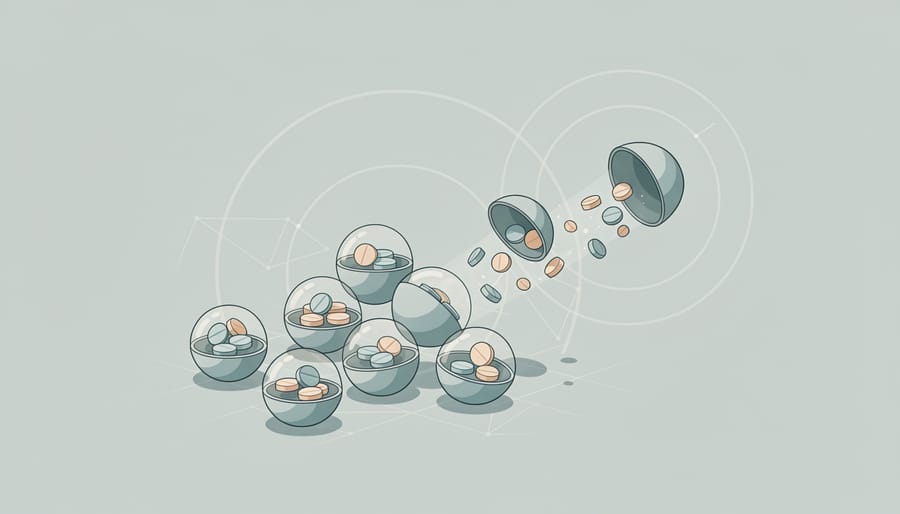
Think of a drug delivery nanoparticle as a tiny delivery truck. The medicine is the cargo, and the particle is the vehicle that carries it through the body toward the right address. Instead of the medicine wandering everywhere on its own, the carrier gives it a bit of structure, protection, and direction.
So what does “nano” actually mean? It’s a prefix for one billionth. A nanometre is a billionth of a metre, and these particles are usually somewhere between about 10 and a few hundred nanometres wide. A single strand of your hair is roughly 80,000 to 100,000 nanometres across. A red blood cell is around 7,000. Picture a soccer ball next to the Earth, and you’re getting close to the scale difference between a nanoparticle and a cell.
Size matters because it changes how a medicine behaves. A very small carrier can slip through places a larger one can’t, stay in the bloodstream longer, and be built to release its contents slowly. That’s the heart of nanotechnology in therapeutics and drug delivery: designing at a tiny scale to help medicine do its job more gently and precisely.
Here are a few plain-language terms you’ll see again in this article:
- Nanoparticle
- A particle so small it’s measured in billionths of a metre, often used as a carrier for medicine.
- Nanometre
- One billionth of a metre, the unit scientists use to measure these tiny particles.
- Carrier
- The “truck” itself, the particle that holds and transports the medicine through the body.
- Payload
- The medicine packed inside or attached to the carrier.
- Targeted delivery
- Guiding medicine toward the specific cells or tissues that need it.
- Side effects
- Unwanted reactions that can happen when a medicine reaches parts of the body it wasn’t meant to treat.
With those basics in hand, it’s easier to see why researchers are so interested in this approach.
Why Researchers Are Interested in Nanoparticle Delivery
Many medicines face hurdles before they can do their job. Researchers are drawn to nanoparticle delivery because it may help with a few of the most common ones.
Some medicines simply don’t dissolve well in the body’s water-based environment. If a drug can’t dissolve, less of it gets absorbed, and it may not work as well as it could. Others spread widely after they’re taken, reaching healthy tissue along with the area that needs help. That broad reach is one reason some treatments cause side effects. And certain medicines are fragile. They can break down in the bloodstream or digestive system before they ever reach their target.
A tiny carrier offers a possible workaround. By packaging a medicine inside or on a nanoparticle, scientists hope to protect it on the way and guide it to the right place. Here are the benefits researchers are working toward:
- More precise targeting, so medicine goes where it’s needed most.
- Fewer side effects, by limiting exposure of healthy tissue.
- Better protection for fragile medicines on their journey through the body.
- Slower, steadier release, which may mean more even effects over time.
It’s worth saying that these are goals, and results vary by treatment. Not every medicine is a good fit for a nanoparticle carrier, and each approach has to be carefully tested before it reaches patients. Still, the underlying idea is easy to appreciate: gentler, more precise treatment that works with your body rather than against it. For anyone managing a long-term condition, that’s a hopeful direction for the future of care.
How Nanoparticles Carry Medicine Through the Body
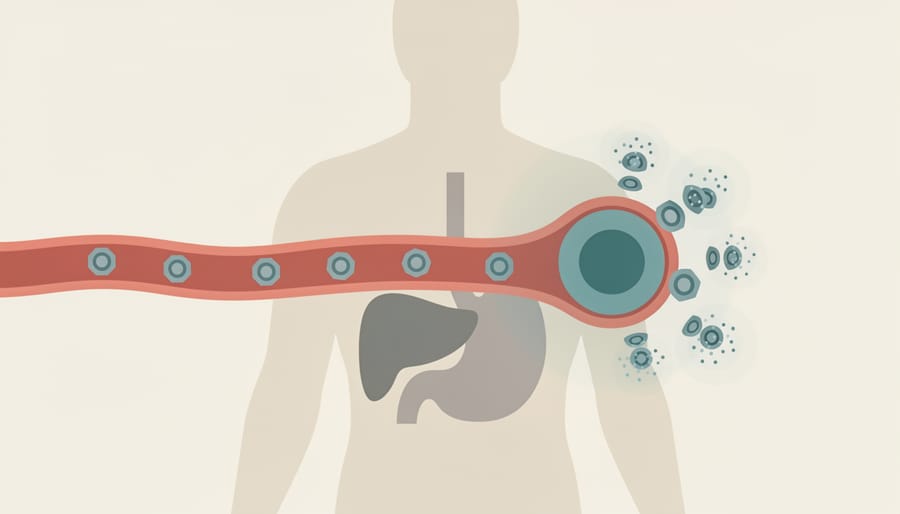
Picture a nanoparticle as a courier on a long trip across a busy city. The journey has a few clear stages.
First comes the packing. The medicine is either tucked inside the particle, like a letter sealed in an envelope, or attached to its outer surface. Scientists choose the design based on what the medicine needs: protection on the road, a slow release, or both.
Next is the ride. Once in the body, usually through an injection, the particles travel through the bloodstream. Their tiny size lets them slip through spaces that larger things can’t.
Then the courier has to find the right address. Some particles are built with a size that tends to collect in certain tissues. Others have surface features that act like a key, fitting only the “locks” found on particular cells. Some are designed to react to conditions at the destination, such as a change in acidity around a tumour, and only then open up.
Finally, there’s the drop-off. Once the particle arrives, it releases its medicine, either all at once or gradually over time. The goal is more of the medicine where it’s needed and less of it elsewhere.
It’s not a perfectly smooth trip. The body has natural defences, including immune cells that are very good at spotting and clearing out unfamiliar particles before they reach their destination. Getting past those defences, while staying safe, is one of the biggest design challenges, and researchers are still working on it. That’s one reason this field moves carefully, with plenty of testing along the way.
Common Types of Drug Delivery Nanoparticles
Not all nanoparticles are built from the same material, and the material shapes what each type does best. Here are the four main families you’ll hear about.
– Fat-based particles (liposomes and lipid nanoparticles): These are tiny bubbles made from fatty molecules, similar to the ones that form our own cell walls. They’re good at carrying both water-friendly and fat-friendly medicines, and some are used in vaccines.
– Polymer-based particles: These are made from gentle, often biodegradable materials that slowly break down in the body. They’re generally good at releasing medicine gradually over hours or days, so a dose lasts longer.
– Protein-based carriers: Built from proteins the body already knows how to handle, these particles tend to be well tolerated. They’re good at carrying medicine to specific tissues and can be designed to break down naturally.
– Metal-based particles: These use tiny pieces of materials like gold or iron. They’re mostly studied for their special physical properties, such as responding to heat or magnetic fields, which may help with imaging and targeted treatment.
Each family has trade-offs. A fat-based bubble may be great at protecting a fragile medicine, while a polymer particle may be better for slow release. Researchers often match the carrier to the job rather than picking one favourite.
Behind the scenes, finding the right match takes a lot of testing. Scientists increasingly rely on computer tools to screen options early, a process closely tied to drug discovery more broadly. Even statistical languages play a part, and you can read about how R programming is changing that work.
How Nanoparticle Drug Delivery Is Used Today and Where It May Be Heading
Nanoparticle carriers are already part of everyday medicine, even if most people never notice them. Some established examples are worth knowing about.
In cancer care, certain chemotherapy drugs are packaged inside fat-based bubbles called liposomes. The goal is to help more of the medicine reach tumours while limiting exposure to healthy tissue, which can mean a different side effect profile for some people. Certain vaccines also rely on lipid nanoparticles, tiny fatty shells that protect delicate genetic instructions on their way into the body’s cells. Nanoparticle carriers are also used in some medicines for serious fungal infections and in a few other treatments, where the packaging helps the drug stay stable or reach the right place.
Then there’s the research side, which is a different story. Scientists are actively studying nanoparticle delivery for conditions many Albertans care about:
– Diabetes: exploring carriers that might release insulin in a more controlled way.
– Heart disease: testing particles that could deliver medicine to damaged blood vessels or heart tissue.
– Brain conditions: working on ways to cross the brain’s protective barrier, which blocks most medicines.
It’s important to be clear about the difference here. The examples in cancer care and vaccines are established, approved uses. The work in diabetes, heart disease, and the brain is still being studied, and many ideas will take years of testing before they’re ready, if they make it at all. Some will work, and some won’t.
That’s what makes this such an interesting field to watch. It’s evolving steadily, one carefully tested step at a time. If you’re managing a chronic condition, there’s no need to wait for the future, because your current treatment plan is still your best tool today. Staying curious and asking your care team what’s new can help you feel informed and involved.
Common Questions About Nanoparticle Medicine

Curious readers tend to ask the same few things when they first hear about nanoparticle medicine. Here are honest, plain answers, along with a couple of everyday tools that can help you stay informed.
Is nanoparticle medicine safe?
Medicines that use nanoparticle carriers go through the same kind of safety review as other treatments before they reach patients. Like any medicine, they can have side effects, and researchers keep studying how these tiny carriers behave in the body over time.
Is it available to me now?
Some nanoparticle-based treatments are already in use, including certain cancer medicines and vaccines. Many others are still in research, so whether one applies to you depends on your condition and your care team’s advice.
Will it replace my current medication?
No. Nanoparticle delivery is a way of improving how some medicines are carried, not a reason to change or stop what you take today. Never adjust a prescription without talking to your doctor or pharmacist first.
How do I know a treatment is approved in Canada?
Health Canada reviews and approves medicines sold in this country, and your pharmacist can confirm whether a product is authorized. Be cautious of any clinic or website offering “nano” treatments that isn’t clearly Health Canada-approved.
If something you’ve read sounds too good to be true, trust that instinct. Real medical progress is usually described carefully, with talk of ongoing studies rather than miracle cures. Bring your questions to your doctor or pharmacist, who know your health history and can tell you what’s proven and what’s still being explored.
You don’t always need an in-person visit to get answers, either. Using telehealth can make it easier to ask a quick question from home, and tracking your daily health patterns with wearable devices can give you useful details to share at your next appointment.
Nanoparticle drug delivery is one of the most promising areas in nanotechnology in therapeutics and drug delivery. Tiny carriers that bring medicine to the right place, in the right amount, could one day make treatment gentler and more precise. Some of it is already helping people today, and much more is still being studied.
Even so, the basics of good health haven’t changed. Balanced eating, regular activity, managing stress, and keeping up with routine check-ups are still the foundation for preventing and managing chronic disease. No new technology replaces the daily choices that keep you feeling your best.
Here are a few simple next steps:
– Write down your questions before your next appointment, and ask your doctor or pharmacist how your current treatment works.
– Stay curious, but check any new treatment you hear about against Health Canada’s approved list.
– Lean on trusted sources, like your care team and reputable health organizations, rather than headlines or social media.
Science will keep moving forward, and you don’t need to be an expert to benefit from it. Stay informed, look after your everyday health, and share what you learn with the people around you. Strong, informed communities across Alberta are built one conversation at a time.