
Nutritional healing with Chinese medicine uses food as a tool to support your body’s natural balance and resilience, helping you build wellness habits that complement medical care for long-term health. Rather than treating specific diseases, this approach focuses on choosing foods based on their energetic properties (warming, cooling, moistening, drying) to support your unique constitution and seasonal needs. For Albertans managing chronic conditions or working to prevent them, these food principles offer practical ways to make everyday meals work harder for your wellbeing alongside the guidance of your healthcare team.
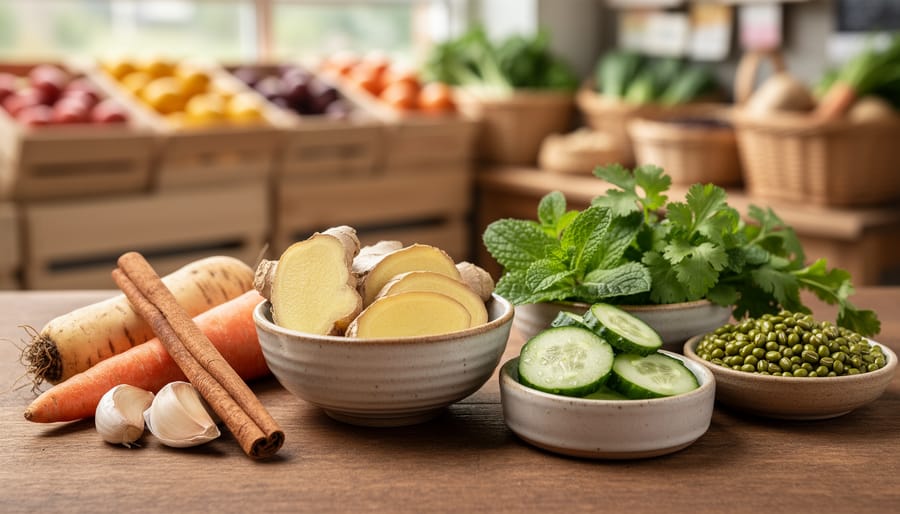
Chinese medicine has viewed food as medicine for thousands of years, not because meals replace medical treatment, but because consistent, thoughtful eating patterns create the foundation for how your body functions day to day. The approach differs from Western nutrition’s focus on vitamins and macros. Instead, it considers how foods affect your body’s temperature, moisture levels, and energy flow. A person who runs cold might benefit from adding more ginger, cinnamon, and root vegetables, while someone dealing with inflammation might focus on cooling foods like cucumber, leafy greens, and mung beans.
This isn’t about exotic ingredients or complicated recipes. Most Chinese medicine food therapy works beautifully with what you’ll find at Alberta farmers markets and grocery stores. The key is understanding a few core principles and then applying them to your current eating habits. Whether you’re supporting digestive health, building energy, or working with your doctor to manage a chronic condition, food choices become another layer of self-care that supports your overall treatment plan rather than replacing professional medical advice.
What Chinese Medicine Teaches About Food and Wellness
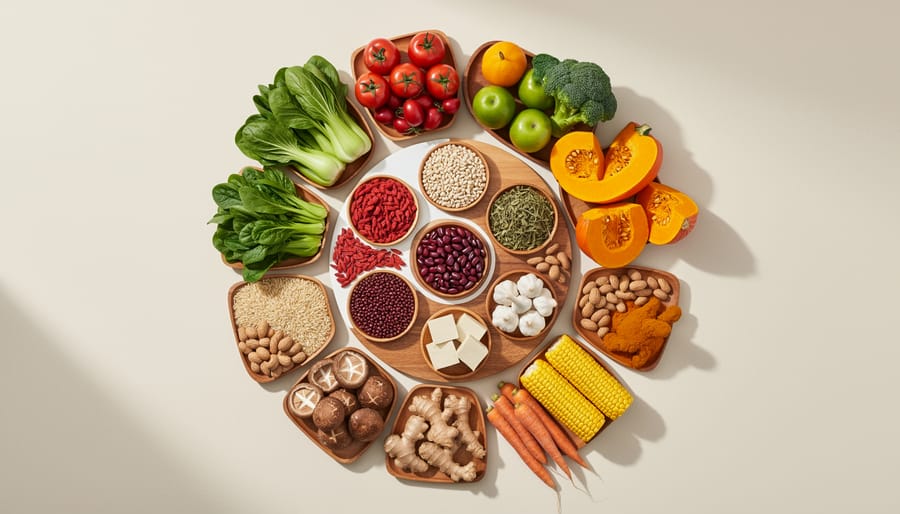
Chinese medicine views food as a foundational part of daily wellness, not a quick fix for illness. At its core, this approach recognizes that what you eat influences your body’s ability to maintain balance and function well over time. Rather than focusing on individual nutrients, the traditional framework looks at how foods work together to support your overall vitality.
The concept of qi (often pronounced “chee”) refers to your body’s functional energy, the capacity to digest food, circulate blood, maintain comfortable temperature, and carry out daily activities. Eating well supports this energy. Foods that are easy to digest, appropriate for the season, and consumed in a relaxed state help maintain steady energy levels throughout the day.
Balance sits at the heart of this philosophy. The yin-yang principle describes complementary qualities: cooling versus warming, moistening versus drying, calming versus energizing. A balanced plate includes foods with different properties rather than extremes in one direction. For example, pairing leafy greens with ginger creates balance between cooling and warming elements. This variety naturally supports the body’s need for different nutrients and helps you avoid overreliance on any single food group.
These principles align closely with modern healthy eating patterns recommended for chronic disease prevention: emphasizing whole foods, variety, and moderation. The difference lies in the lens, Chinese medicine considers not just what nutrients a food contains, but how it behaves in your body and how it fits with other foods on your plate.
Think of this approach as one layer of your overall wellness strategy, working alongside regular physical activity, adequate sleep, stress management, and medical care when needed.
The Five Flavors and What They Mean for Your Plate
In Chinese medicine, the five flavors, sweet, sour, bitter, pungent, and salty, aren’t just taste sensations. They’re a framework for understanding how different foods can support your body’s natural balance and overall wellness. Think of these flavors as a simple checklist for building more varied, nourishing meals rather than a strict prescription.
Each flavor connects to different aspects of how your body functions. Sweet foods (think grains, root vegetables, and naturally sweet fruits) are considered grounding and energizing, forming the foundation of most balanced meals. Sour flavors from foods like berries, tomatoes, and fermented vegetables are thought to help conserve moisture and support digestion. Bitter greens and dark leafy vegetables can aid in clearing heat and supporting detoxification processes. Pungent foods like onions, garlic, and ginger are warming and can help circulation. Salty foods, including seaweed and certain fish, are believed to soften and moisten.
Here’s how these categories translate to foods you can find at Alberta grocery stores and farmers’ markets:
| Flavor | Common Alberta Foods | General Wellness Support |
|---|---|---|
| Sweet | Carrots, squash, oats, apples, beets | Energy, grounding, digestion |
| Sour | Berries, sauerkraut, yogurt, tomatoes | Moisture retention, digestive comfort |
| Bitter | Kale, dandelion greens, coffee, dark chocolate | Clearing excess, supporting detox |
| Pungent | Garlic, onions, ginger, radishes, mustard greens | Circulation, warmth, respiratory comfort |
| Salty | Miso, seaweed, celery, fish | Softening, mineral support, hydration |
The practical takeaway? Aim to include several flavors in your daily eating pattern. A balanced plate might combine sweet roasted root vegetables, bitter greens sautéed with pungent garlic, and a splash of sour lemon juice. This variety naturally supports nutritional completeness while making meals more interesting and satisfying. You’re not treating specific health conditions with these choices, you’re supporting your overall wellness through diverse, whole-food nutrition that aligns with both traditional wisdom and modern healthy eating principles.
Food Temperature and Energy: Beyond Hot and Cold
When Chinese medicine talks about food being “warming” or “cooling,” it’s not about serving temperature, it’s about how foods affect your body’s energy and comfort. Think of it as the subtle influence a food has on how you feel after eating it, not whether you heat it up or serve it cold.
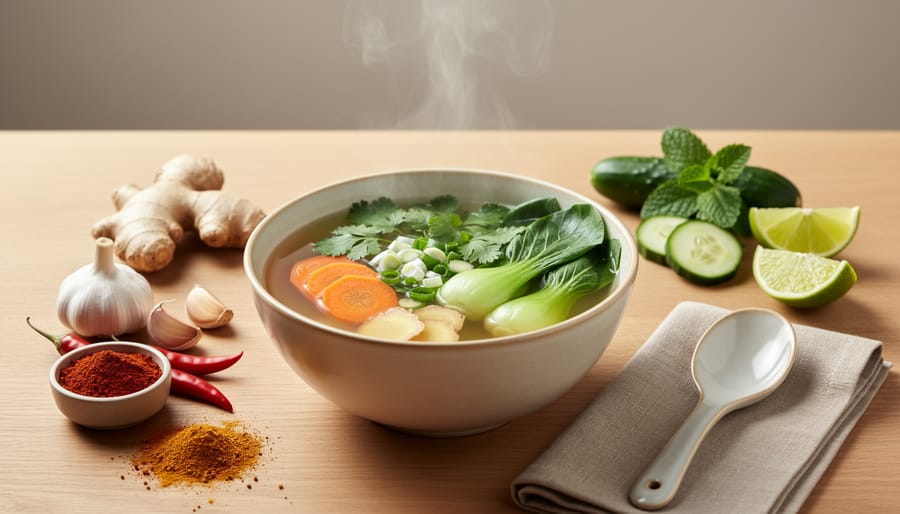
Warming foods tend to support circulation and can help you feel more energized. These include ginger, cinnamon, chicken, lamb, walnuts, and oats. During Alberta’s long winters, incorporating these foods into your meals might help you feel more comfortable and maintain your vitality when the temperatures drop. They’re particularly satisfying when you’re craving heartier fare.
Cooling foods have a lighter, more refreshing quality. Cucumbers, leafy greens, watermelon, pears, and tofu fall into this category. They can be especially appealing during our brief but intense summer heat. Many people find these foods naturally comfortable when the weather warms up.
Neutral foods sit in the middle, neither warming nor cooling, and form the foundation of balanced eating. Rice, potatoes, carrots, apples, and eggs are all considered neutral. These staples work well year-round and help create meals that feel satisfying without pushing your system in either direction.
This framework isn’t about rigid rules. It’s simply another lens for thinking about variety and balance in your eating patterns. You might notice that you naturally gravitate toward warming soups in January and crisp salads in July. That’s the principle in action. Some people also explore herbs like the self-heal plant as part of their broader wellness routines.
Your body’s signals, what feels good, what leaves you energized, remain your best guide.
Building Balanced Meals the Chinese Medicine Way
A Chinese medicine-inspired plate starts with variety and balance, not strict rules. Think of building meals that combine different colours, textures, and food types, an approach that naturally supports getting diverse nutrients your body needs for general wellness.
The goal is creating satisfying meals that feel good to eat and provide sustained energy throughout your day. Here’s a practical framework:
- Start with whole grains or starchy vegetables as your foundation, brown rice, quinoa, sweet potato, or whole grain bread. These provide steady energy and ground your meal.
- Add a variety of vegetablesaiming for at least two different colours. Leafy greens, root vegetables, and colourful options like bell peppers or carrots each bring different nutrients and energetic properties to your plate.
- Include a protein sourcebeans, lentils, tofu, eggs, fish, or meat. Chinese medicine emphasizes matching protein portions to your activity level rather than overloading.
- Incorporate small amounts of healthy fats through nuts, seeds, avocado, or cooking oils. These help with nutrient absorption and satisfaction.
- Consider adding fermented foods like sauerkraut or miso, which support digestive wellness, a key focus in Chinese dietary traditions.
This balanced approach aligns with general healthy eating patterns that support chronic disease prevention. It’s not about perfection at every meal but creating an overall pattern of variety and moderation.
Between meals, practices like holistic movement and even exploring how music vibrations affect wellbeing can complement your nutritional choices as part of a comprehensive wellness routine.
Remember that food therapy supports your overall health alongside, never instead of, medical care from your healthcare provider. If you’re managing specific health conditions, discuss any dietary changes with your doctor or a registered dietitian who can provide personalized guidance for your situation.
Supporting Your Wellness Through the Seasons

Alberta’s dramatic seasonal shifts offer natural cues for adjusting your eating patterns to support your body’s changing needs throughout the year. Chinese medicine views seasonal eating as a way to maintain balance and vitality, complementing, not replacing, the foundational health practices your doctor recommends.
During our harsh winters, warming foods like root vegetables, hearty grains, and slow-cooked soups can help you feel more energized and comfortable. Think roasted beets and squash, warming spices like ginger and cinnamon, and nourishing bone broths. These choices align with your body’s natural inclination toward heartier meals when temperatures drop.
As spring arrives, lighter foods support the season’s renewal energy. Fresh greens, sprouts, and herbs coming into farmers’ markets provide variety after winter’s heavier fare. Adding bitter greens to your plate supports overall wellness while introducing seasonal variety.
Summer’s abundance calls for cooling foods that help you feel comfortable in the heat. Berries, cucumber, leafy greens, and fresh herbs are all readily available at Alberta markets. These lighter choices naturally align with what appeals when temperatures rise.
Fall bridges the transition back to warming foods. Pumpkins, apples, and hardy greens support your shift toward winter eating patterns. This seasonal rhythm connects you to Alberta’s agricultural cycles and encourages eating locally, an approach that overlaps with ecotherapy principles of connecting with your local environment.
Remember, seasonal eating is one aspect of a healthy lifestyle alongside regular physical activity, stress management, and routine medical care. These food choices support general wellness rather than treating specific health conditions.
Making It Work in Your Alberta Kitchen
You don’t need specialty groceries or rare ingredients to start exploring these food principles. Most Chinese medicine dietary recommendations translate easily to what’s already available at your local Safeway, Sobeys, or farmers’ market.
Start by noticing what you already eat and how you feel. If you tend toward feeling cold (especially during Alberta winters), you might lean more toward warming foods like ginger, cinnamon, chicken, and root vegetables. If you run warm or feel overheated easily, cooling foods like cucumber, lettuce, and pears can support your comfort. This awareness doesn’t replace medical advice, it’s about becoming more tuned in to your body’s responses to different foods.
Alberta’s growing season offers plenty of ingredients that align with Chinese medicine principles. Local carrots, beets, squash, and potatoes all have warming properties useful during our long winters. Summer farmers’ markets provide cooling greens, berries, and stone fruits. You’re not hunting for exotic items, you’re choosing thoughtfully from what’s already here.
- Add one warming spice to your usual cooking this week, try ginger in soup or cinnamon in oatmeal
- Notice the balance of flavors in one meal, are you getting sweet, sour, bitter, pungent, and salty throughout the day?
- Choose one seasonal vegetable at your next grocery trip and learn its energetic properties
- Swap one processed snack for a whole food option this week, an apple instead of applesauce, for instance
- Keep a simple food journal noting how different meals make you feel energy-wise
Budget matters. Dried beans, lentils, rice, seasonal vegetables, and eggs are all affordable staples that fit Chinese medicine frameworks. You don’t need organic or specialty versions to benefit from eating more whole foods and paying attention to balance. If time is tight, batch-cook warming soups or stews on weekends, these foods reheat well and often taste better the next day.
This approach works best as part of your overall wellness plan alongside regular medical care, movement, and stress management. Small, sustainable shifts in how you choose and prepare food can support your energy and comfort without upending your routine or budget.
Chinese medicine food therapy offers valuable insights into how our daily food choices can support overall wellness, but it’s just one piece of a much larger picture. The principles we’ve explored, balancing flavors, choosing seasonal foods, and considering the energetic properties of what we eat, work best when they’re part of a complete approach to health that includes regular medical care, physical activity, stress management, and other wellness practices.
If you’re managing a chronic condition like diabetes, heart disease, or digestive issues, these food principles should complement, never replace, the treatment plan you’ve developed with your healthcare provider. Think of Chinese medicine nutrition as a way to support your body’s natural resilience and create eating habits that align with general health recommendations, not as a standalone treatment for specific diseases.
Before making significant changes to your diet, especially if you have existing health conditions or take medications, talk with your doctor, dietitian, or other qualified healthcare professional. They can help you understand how traditional food wisdom might fit into your personal health plan safely and effectively.
Start small. Pick one principle that resonates with you, maybe eating more warming foods in Alberta’s winter or adding a wider variety of flavors to your meals. Notice how these changes make you feel over time. Building sustainable habits matters more than perfect adherence to any single approach. Your journey toward better health happens one meal, one choice, and one day at a time.