

Your workspace directly impacts your physical health, mental wellbeing, and long-term disease risk. While offices to let in Sandton Currie Group showcase wellness-focused designs, these principles apply universally—including right here in Alberta. Workspaces equipped with natural lighting, ergonomic furniture, air quality systems, and movement-friendly layouts aren’t luxuries; they’re essential tools for preventing chronic conditions like cardiovascular disease, diabetes, and musculoskeletal disorders that affect millions of Canadians.
Consider how many hours you spend at work each week. If your office lacks proper ventilation, encourages prolonged sitting, or floods you with artificial light, you’re facing daily health risks that compound over time. Forward-thinking employers globally are recognizing this connection between environment and employee health, integrating standing desks, biophilic design elements, fitness spaces, and stress-reduction zones into their properties.
You don’t need to relocate to benefit from these insights. Understanding better workplace design empowers you to advocate for meaningful changes in your current environment. Whether you’re an employee requesting ergonomic assessments, a manager redesigning office layouts, or a business owner considering your next lease, wellness-focused workspace principles offer actionable pathways to reducing chronic disease risk. This article explores how intentional office design supports your health goals and provides practical steps you can implement immediately, regardless of your location or workspace constraints.
The Hidden Health Costs of Traditional Office Spaces
Your workspace affects your health more than you might realize. Many traditional office environments unknowingly contribute to the very chronic diseases that affect countless Canadians each day. Understanding these hidden risks empowers you to make better choices about where and how you work.
Prolonged sitting stands as one of the most significant workplace health concerns. When you spend eight or more hours at a desk, your body’s metabolism slows, affecting blood sugar regulation and cholesterol levels. This sedentary behavior increases your risk of cardiovascular disease, type 2 diabetes, and obesity. Your muscles remain inactive for extended periods, reducing circulation and limiting the natural processes that help prevent chronic inflammation.
Poor lighting creates another layer of concern. Harsh fluorescent bulbs and inadequate natural light contribute to eye strain, headaches, and disrupted sleep patterns. These factors don’t just affect your comfort; they impact mental health and can worsen conditions like depression and anxiety. Your body’s natural rhythms depend on appropriate light exposure to regulate hormones that influence mood and overall wellness.
Indoor air quality often goes unnoticed until problems arise. Inadequate ventilation traps pollutants, allergens, and carbon dioxide in enclosed spaces. This compromises respiratory health and can trigger or worsen asthma, allergies, and other breathing difficulties. Poor air quality also reduces cognitive function, making it harder to focus and perform at your best.
Stress-inducing environments complete the picture. Noisy, cramped spaces without privacy or relaxation areas keep your body in a constant state of tension. This chronic stress triggers inflammation throughout your body, a key factor in developing heart disease, diabetes, and other serious health conditions.
Recognizing these workplace health hazards helps you understand why wellness-focused office features matter. Your work environment should support your health goals, not undermine them. Small changes in office design can make meaningful differences in preventing and managing chronic diseases.

What Makes an Office Space ‘Wellness-Focused’?
Natural Light and Biophilic Design
Natural light isn’t just about aesthetics—it’s a powerful tool for your wellbeing. When you work in spaces with abundant daylight, your body responds positively in measurable ways. Exposure to natural light helps regulate your circadian rhythm, the internal clock that controls your sleep-wake cycle. This means better sleep quality at night and more alertness during the day, which directly impacts your ability to manage stress and maintain stable blood sugar levels.
Biophilic design takes this further by incorporating plants, natural materials, and views of nature into workspaces. Research shows that these elements can lower cortisol, your body’s primary stress hormone. For those managing chronic conditions like diabetes or heart disease, keeping stress hormones in check is essential for overall health.
Even if your current workspace in Alberta lacks these features, you can advocate for change. Simple additions like desk plants, positioning your workspace near windows, or taking breaks in outdoor areas can make a difference. Consider discussing wellness improvements with your employer—many organizations are discovering that healthier environments benefit both employees and productivity. Small changes in your daily work environment can support your journey toward better health outcomes and chronic disease prevention.
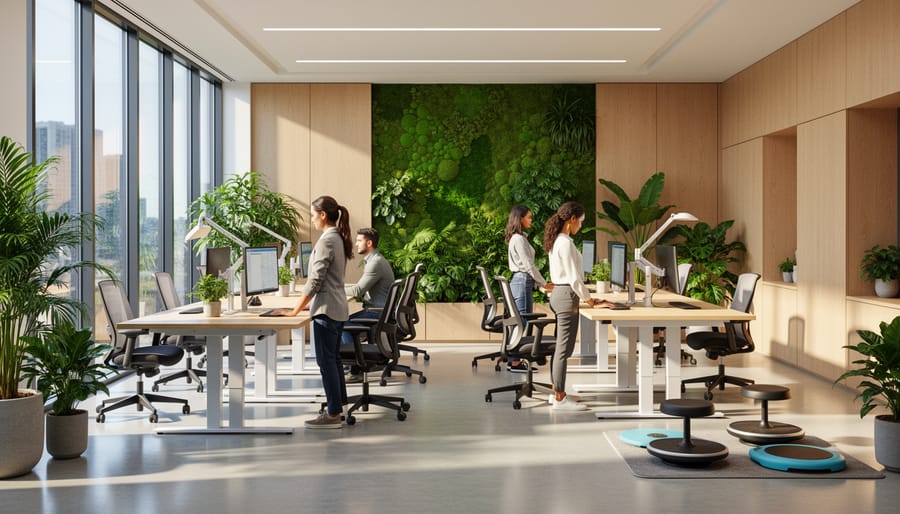
Movement-Friendly Layouts
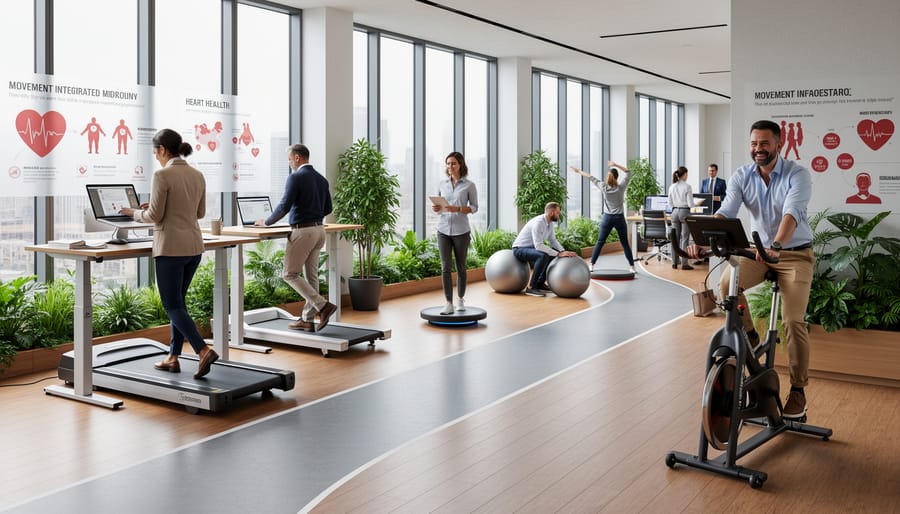
Modern wellness-focused offices are fighting back against the health risks of sitting all day with thoughtfully designed spaces that keep you moving. Standing desks have become a cornerstone feature, allowing you to alternate between sitting and standing throughout your workday, which research shows can reduce back pain and improve circulation. But the movement story doesn’t stop there.
Progressive workplaces now incorporate dedicated walking meeting spaces, both indoor corridors and outdoor paths, where colleagues can discuss projects while staying active. This simple shift transforms traditionally sedentary meetings into opportunities for physical activity that benefits your heart health.
On-site fitness facilities eliminate the excuse of not having time to exercise. Whether it’s a full gym, yoga studio, or even a small room with basic equipment, having these amenities steps away from your desk makes it easier to fit movement into your busy schedule.
Perhaps most importantly, movement-friendly layouts prioritize accessible, inviting stairwells over elevators. Well-lit, aesthetically pleasing stairs encourage you to take the active route, adding valuable cardiovascular activity throughout your day. These small choices add up, helping you combat the sedentary patterns that contribute to heart disease, diabetes, and other chronic conditions. Your workspace can become your wellness partner.
Air Quality and Ventilation Systems
Clean air at work isn’t just about comfort—it directly affects your health and how well you think throughout the day. Modern wellness-focused offices use advanced HVAC systems that constantly filter out dust, allergens, and pollutants that can trigger asthma or worsen respiratory conditions. These systems maintain optimal humidity levels, reducing dry air that irritates your throat and sinuses during long work hours.
High-quality air purification technology removes tiny particles you can’t see but that impact your wellbeing. Studies show that better air quality improves concentration, memory, and decision-making—essential for your productivity and long-term brain health. Some offices incorporate living plant walls that naturally clean the air while creating calming green spaces.
If you’re managing chronic respiratory issues or want to prevent them, consider how your workspace air quality affects you daily. You can advocate for similar improvements in your Alberta workplace by discussing ventilation upgrades with building management. Simple changes like adding desk plants, requesting air quality assessments, or ensuring proper ventilation maintenance can make a real difference in reducing your exposure to respiratory irritants during the workweek.
Spaces for Mental Wellness
Modern wellness-focused offices recognize that mental health is just as important as physical health, especially when you consider that chronic stress contributes to conditions like heart disease and diabetes. These spaces typically include quiet rooms where you can take a mental break during overwhelming days, helping to lower cortisol levels and reduce long-term health risks. Meditation spaces offer dedicated areas for mindfulness practices, which research shows can improve blood pressure and support better sleep patterns. Stress-reduction zones might feature comfortable seating, calming colors, and natural elements that create a restorative environment away from your desk. These spaces aren’t luxuries but practical tools for managing daily stress before it becomes chronic. If your current workplace lacks these features, consider advocating for mental wellness areas by sharing how they benefit both employee health and productivity. Even small changes, like designating a quiet corner or implementing phone-free zones, can make a meaningful difference in your daily stress management and overall wellbeing.
Real Health Benefits You Can Measure
When you spend eight or more hours daily in a wellness-focused workspace, your body responds in measurable ways. Research consistently shows that offices designed with health in mind deliver real improvements you can track.
Let’s start with absenteeism. Studies reveal that workplaces with natural light, air quality monitoring, and movement-friendly designs reduce sick days by up to 30%. The reason is straightforward: when your workspace supports your immune system through better air circulation and reduces eye strain with proper lighting, you’re simply less likely to get sick.
Stress markers tell another compelling story. Your body produces cortisol when you’re under pressure, and chronically high levels contribute to everything from weight gain to heart disease. Wellness offices with quiet zones, biophilic design elements like plants, and spaces for brief mental breaks can lower cortisol levels by 15-20%. This happens because your nervous system gets regular opportunities to shift from “fight or flight” mode into “rest and digest” mode throughout the day.
Physical activity levels naturally increase in offices designed for movement. When you have standing desk options, walking paths, or stairs that are inviting rather than hidden, you accumulate more daily steps without needing gym time. Even adding 2,000-3,000 extra steps daily helps regulate blood sugar and supports healthy blood pressure.
Speaking of blood sugar, offices that make healthy snacks accessible and discourage prolonged sitting help stabilize glucose levels. When you move regularly, your muscles pull glucose from your bloodstream more efficiently, reducing diabetes risk. Similarly, the combination of stress reduction and increased movement helps maintain healthy blood pressure by keeping blood vessels flexible and reducing inflammation.
The benefits extend beyond work hours too. People working in wellness-focused environments report improved sleep quality, likely because reduced workplace stress and increased daytime movement prepare your body for better rest. Quality sleep then reinforces all these other health gains, creating a positive cycle that protects against chronic disease.
How Sandton Central’s Approach Translates to Your Alberta Workplace
While Sandton Central may be thousands of kilometers away, the wellness principles behind their office design can inspire meaningful changes right here in Alberta. You don’t need to relocate to benefit from healthier workspace concepts—you can advocate for them in your current workplace or look for these features when choosing your next office environment.
Start by championing natural light access. Whether you’re an employee, manager, or business owner, pushing for workspaces near windows or requesting removal of unnecessary barriers to daylight costs nothing but can significantly impact your daily energy levels and mood. If you’re involved in office decisions, prioritize spaces with large windows over interior rooms, even if they seem less prestigious.
Movement-friendly design is another transferable principle. Encourage your workplace to create walking paths, standing desk options, or simply designate a stairwell that’s inviting rather than purely functional. These changes don’t require massive budgets—sometimes it’s as simple as rearranging existing furniture to create clear walkways or establishing a culture where walking meetings are normalized.
Air quality matters everywhere, not just in South Africa. Advocate for regular HVAC maintenance, introduce desk plants that naturally filter air, and push for policies that ensure proper ventilation. In Alberta’s colder months when buildings are sealed tight, this becomes even more critical for preventing illness and maintaining focus.
Community spaces that encourage social connection can be as simple as a welcoming break room or a communal table. These elements reduce isolation and stress—key factors in chronic disease prevention. You have more power than you think to shape your workspace wellness, starting with small, persistent requests that benefit everyone’s long-term health.
Taking Action: What You Can Do Today
You don’t need to wait for a complete office renovation to create a healthier workspace. Here are practical steps you can take today, regardless of your role.
If you’re an employee, start small but impactful. Request a standing desk converter or ask about existing ergonomic equipment your company may already have available. Position your desk near natural light if possible, or bring in a full-spectrum desk lamp to improve your lighting. Take micro-breaks every hour to stretch or walk around your floor. Create a mini wellness zone at your desk with a small plant, which can improve air quality and reduce stress. Talk to your HR department about wellness interests, as many companies have programs that simply need employee participation to justify expansion.
Managers have additional influence to pilot wellness initiatives. Propose walking meetings for one-on-one discussions or small team check-ins. Designate a quiet space for breaks or brief meditation. Survey your team about their workspace challenges and present findings to decision-makers with specific, cost-effective solutions. Even rearranging existing furniture to maximize natural light can make an immediate difference.
Business owners in Alberta can research local suppliers for ergonomic furniture or consult with workplace wellness experts. Consider starting with one wellness feature, like improved air filtration or adjustable desks for those who request them, and build from there based on employee feedback. Small investments in workspace wellness often yield significant returns through reduced absenteeism and improved productivity.
Whatever your position, the key is starting somewhere today.
Your office environment is more than just a place to work—it’s a modifiable risk factor for chronic disease, just like your diet and exercise habits. The research is clear: where and how you work directly impacts your long-term health outcomes. Prolonged sitting, poor air quality, limited natural light, and high-stress environments contribute to conditions like heart disease, diabetes, and mental health challenges. The good news? You have the power to change this.
Whether you’re an employee or employer in Alberta, it’s time to view your workspace as an essential component of your overall health strategy. Start conversations with your workplace about wellness improvements. Advocate for standing desks, better lighting, air purification systems, and spaces that encourage movement throughout the day. Small changes create meaningful results over time.
Wellness-focused office spaces represent the future of disease prevention. They acknowledge that health isn’t just about what happens outside work hours—it’s about creating supportive environments where we spend most of our waking lives. By prioritizing workspace wellness today, you’re investing in your health tomorrow. Your office should support your wellbeing, not compromise it.