

Check your dryer vent for lint buildup every three months by disconnecting the vent hose and using a flashlight to inspect for blockages. Clear visible lint with a vacuum attachment or specialized dryer vent brush, ensuring the exterior vent flap opens freely when the dryer runs. Schedule professional dryer vent cleaning annually to prevent dangerous lint accumulation that forces contaminated air back into your home.
Your dryer vent directly impacts your family’s health in ways you might not realize. When vents become clogged or damaged, they can’t properly exhaust moisture, lint particles, and potentially harmful gases outside. This forces pollutants to recirculate through your living spaces, contributing to respiratory irritation, allergy symptoms, and creating conditions where mold thrives. For Albertans managing chronic respiratory conditions or living in our tightly sealed, energy-efficient homes, compromised indoor air quality from faulty dryer vents compounds existing health challenges.
Understanding when your dryer vent needs professional repair protects both your home and health. This guide will help you recognize warning signs, understand the health implications specific to Alberta’s climate, and take confident action to ensure your home’s air stays clean and safe.
The Hidden Connection Between Your Dryer Vent and the Air You Breathe
Your dryer does more than just dry clothes. It’s actually a powerful exhaust system designed to push hot, moist air filled with lint particles outside your home. When everything works properly, you never think twice about it. But here’s what many Alberta homeowners don’t realize: when your dryer vent becomes blocked or damaged, all that contaminated air has nowhere to go except back into your living space.
Think about what happens during a typical drying cycle. Your dryer heats air to remove moisture from clothing, and that process creates lint, tiny fabric fibers that break loose with every tumble. A properly functioning vent captures this lint in the filter and expels the humid air outdoors. However, when lint builds up in the vent pipe or the vent becomes disconnected or damaged, pressure builds within the system. Similar to issues addressed through dryer vent repair Clearwater FL, Alberta homes face the same ventilation challenges.
This backup creates a domino effect in your home. Moisture gets trapped inside, raising humidity levels that encourage mold growth in walls and behind appliances. Lint particles circulate through your rooms, settling on surfaces and floating in the air you breathe. For people managing respiratory conditions like asthma or chronic bronchitis, this invisible pollution makes symptoms worse.
You might notice your bathroom mirror fogging up when the dryer runs, or a musty smell in your laundry room. These are signs your dryer vent isn’t doing its job. The good news? Understanding this connection puts you in control. Recognizing these warning signs means you can take action before your indoor air quality suffers.
Warning Signs Your Dryer Vent Is Compromising Your Family’s Health
Physical Symptoms to Watch For
Your body often signals when something’s wrong with your indoor air quality, and a clogged dryer vent can trigger several noticeable symptoms. Many Alberta residents experience persistent headaches, particularly after doing laundry or spending time near their dryer. You might notice increased sneezing, coughing, or a scratchy throat that seems worse at home than elsewhere.
Respiratory issues are especially common. If you or family members experience unexplained shortness of breath, wheezing, or worsening asthma symptoms, your dryer vent could be circulating lint particles and moisture throughout your home. These airborne irritants inflame your airways and can aggravate existing conditions.
Allergies often intensify when dryer vents aren’t functioning properly. Dust mites thrive in the humid environment created by poor ventilation, leading to itchy eyes, skin rashes, and congestion. Some people report feeling unusually fatigued or experiencing difficulty concentrating when indoor air quality drops.
Long-term exposure to poor air quality increases your risk of developing chronic respiratory conditions and cardiovascular problems. If you notice these symptoms appearing regularly, especially on laundry days, it’s time to check your dryer vent system and consider professional inspection to protect your health.

Home Environment Red Flags
Your home often signals dryer vent problems before they become serious health hazards. Recognizing these warning signs early helps protect both your indoor air quality and your family’s wellbeing.
A musty or burning smell near your dryer is one of the clearest indicators something’s wrong. This odour comes from lint buildup trapping moisture and potentially overheating. If you notice your laundry room feels unusually warm during or after drying cycles, your vent system isn’t expelling hot air properly.
Pay attention to how long your clothes take to dry. If towels that once dried in one cycle now need two or three, your vent is likely restricted. This not only wastes energy but creates conditions where mold and mildew can thrive in the trapped moisture.
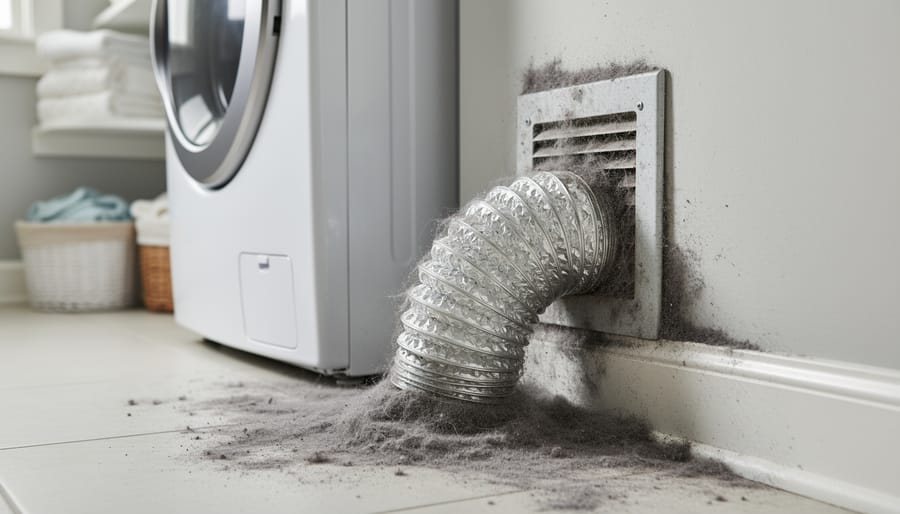
Visible lint around your dryer, on the floor, or near the exterior vent opening tells you the system isn’t functioning as designed. Even small amounts of visible lint indicate significant buildup inside the ductwork.
Excess humidity in your laundry area or nearby rooms suggests moisture isn’t venting outside. This creates an ideal environment for mold growth and dust mites, both problematic for respiratory health.
Alberta’s dry climate might mask some humidity issues, making other signs like extended drying times and lint accumulation even more important to monitor. If you notice any combination of these red flags, it’s time to arrange a professional inspection. Addressing these issues promptly prevents more serious air quality problems and potential fire hazards.
How Poor Dryer Vent Maintenance Threatens Your Long-Term Health
When your dryer vent isn’t properly maintained, the health consequences extend far beyond immediate discomfort. Over time, the buildup of lint, moisture, and poor air circulation creates an environment that can contribute to serious long-term health challenges, particularly for Albertans already managing chronic conditions.
Poor dryer vent maintenance forces contaminated air back into your living spaces. This trapped air carries lint particles, chemical residues from fabric softeners and detergents, and excess moisture that promotes mold growth. For individuals with asthma, COPD, or other respiratory conditions, these pollutants act as constant irritants that can worsen symptoms and trigger flare-ups you might otherwise avoid.
The cardiovascular system also bears the burden of poor indoor air quality. When you’re regularly breathing in airborne particles and mold spores, your body responds with inflammation. This ongoing inflammatory response puts additional stress on your heart and blood vessels, potentially contributing to elevated blood pressure and increased cardiovascular risk over months and years of exposure.
Mold deserves special attention in Alberta’s climate. The moisture expelled from your dryer, when not properly vented outdoors, creates ideal conditions for mold growth in walls, ceilings, and ductwork. Some people are particularly sensitive to mold exposure, experiencing everything from persistent coughs and skin irritation to fatigue and headaches that impact daily quality of life.
The good news? These risks are entirely preventable. Regular dryer vent maintenance is a straightforward step that protects your home environment and supports your long-term health. By keeping vents clear and functioning properly, you’re investing in cleaner air for yourself and your family. Prevention is always easier and more effective than managing health complications after they develop. A simple maintenance schedule can make a significant difference in your respiratory health and overall wellbeing for years to come.
Alberta-Specific Challenges for Dryer Vent Health
Living in Alberta means dealing with unique conditions that can make dryer vent problems more serious for your indoor air quality and health. Understanding these local factors helps you take the right steps to protect your home and family.
Our long, cold winters create a perfect storm for dryer vent issues. When temperatures drop, we seal our homes tightly to stay warm and save on heating costs. This is smart for your energy bills, but it means less fresh air circulation. When your dryer vent isn’t working properly, all that lint, moisture, and potentially harmful particles have nowhere to go except back into your living space. You’re essentially breathing the same air over and over, along with whatever contaminants your dryer is releasing.
Alberta’s climate challenges extend to your vent system itself. The extreme temperature swings we experience, from minus 30 in winter to plus 30 in summer, put significant stress on exterior vent components. Metal vents expand and contract, connections can loosen, and damper flaps may freeze shut in winter, blocking proper airflow. When exhaust can’t escape outside, moisture backs up into your home, creating conditions where mold and mildew thrive.
Alberta building codes require specific vent installations for safety, but older homes may not meet current standards. Additionally, our dry winter air combined with dryer moisture creates unusual humidity patterns that can confuse homeowners about whether they have a ventilation problem.
These regional factors mean Alberta residents need to be extra vigilant about dryer vent maintenance. Regular inspections become even more important here than in milder climates, making professional assessment a worthwhile investment in your family’s respiratory health.
Taking Action: Your Dryer Vent Repair and Maintenance Plan
What You Can Do Today
You don’t need special tools to start improving your dryer vent safety today. Begin by unplugging your dryer and pulling it away from the wall to access the vent connection. Look for visible lint buildup around the vent opening and remove what you can reach by hand or with a vacuum cleaner attachment.
Check the exterior vent hood outside your home. Make sure the flap opens freely when you run your dryer and closes completely when it’s off. Clear away any lint, bird nests, or debris blocking the opening. If you notice the flap is damaged or stuck, that’s a sign professional repair may be needed.
Run your dryer for ten minutes and feel the exhaust coming from the outside vent. It should be warm and steady. Weak airflow suggests a blockage somewhere in your vent line.
Inside your home, clean the lint trap thoroughly before every load. Use a damp cloth to wipe down the lint trap housing, where hidden buildup often accumulates. Watch for warning signs like longer drying times, excessive heat, or a burning smell during operation. These indicate it’s time to call a professional for a thorough inspection and cleaning to protect both your indoor air quality and your family’s health.
When to Call a Professional in Alberta
Knowing when to call a professional can protect both your home and your health. If you notice visible lint buildup around your dryer, clothes taking multiple cycles to dry, or a burning smell during operation, it’s time to reach out for help. Similarly, if you haven’t had your vent cleaned in over a year, scheduling a professional inspection is a smart preventive step.
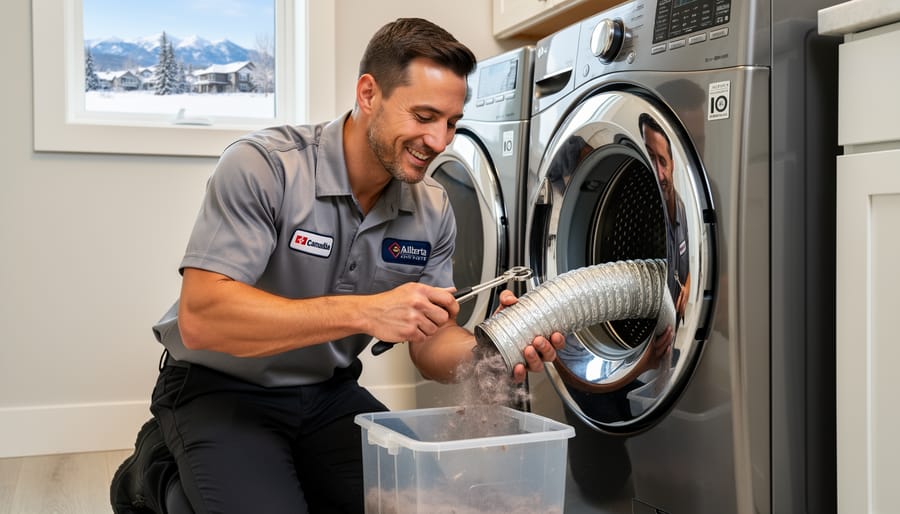
Professional dryer vent technicians in Alberta can thoroughly clean your system, identify hidden blockages, and repair damaged sections that may be compromising your indoor air quality. During a service visit, expect a complete inspection of your vent system, removal of accumulated lint and debris, and recommendations for maintaining optimal airflow.
Finding qualified technicians is straightforward. Look for licensed professionals with experience in both HVAC systems and indoor air quality. Ask about their cleaning methods, certifications, and whether they provide before-and-after airflow measurements. Many Alberta residents find reliable services through local home improvement associations or community recommendations.
Think of professional dryer vent maintenance as a health investment rather than just another expense. The cost of regular service is minimal compared to potential medical bills from respiratory issues or the devastating impact of a house fire. Taking action today protects your family’s wellbeing tomorrow.
Creating Your Ongoing Maintenance Schedule
Establishing a regular maintenance routine protects your healthy home environment year-round. Check your dryer vent exterior monthly for blockages, especially after Alberta’s winter storms when snow and ice can restrict airflow. Clean your lint trap after every load and vacuum the trap housing monthly to prevent buildup.
Schedule professional inspections twice yearly, ideally in spring and fall when seasonal changes affect your home’s ventilation. Spring cleaning should address winter moisture accumulation, while fall preparation ensures your system handles increased indoor drying during colder months.
Keep a simple maintenance log noting cleaning dates and any performance changes. Watch for longer drying times or excessive heat, these signal it’s time for professional attention. Alberta’s temperature extremes make consistent monitoring essential. Set calendar reminders to maintain your schedule without relying on memory alone, making vent care a sustainable habit that safeguards both your home and respiratory health.
Taking care of your dryer vent isn’t just about preventing fires or improving appliance efficiency—it’s a meaningful step toward protecting your long-term health. By maintaining clean, properly functioning dryer vents, you’re actively reducing indoor air pollutants that can trigger respiratory issues, allergies, and complications for those managing chronic conditions. This simple home maintenance task fits perfectly into a comprehensive approach to healthy living, alongside nutritious eating, regular exercise, and routine health screenings.
We encourage you to take action today. Start by inspecting your dryer vent for warning signs like longer drying times, excessive lint buildup, or musty odours. If you notice any concerns, reach out to a qualified professional in Alberta for an assessment. Your home environment plays a crucial role in your overall wellness, and ensuring clean indoor air is an investment in your family’s health. Remember, prevention is always easier than treatment. By addressing dryer vent maintenance now, you’re taking control of your indoor air quality and supporting your journey toward better health.